N reduction (Nitrogen)

Precision nutrient application

4.3. Silage runoff management

Wilting of the forage crop decreases the moisture content of the forage and on that way the silage effluent extraction and prevents dry matter loss from the silage. The collection of the silage effluent into closed container prevents nutrient runoff to the surface and ground water and the effluent can be used as fertilizer on the field. Silage stacking should be at least 10 m away from watercourse.
Precision nutrient application

6.2. Constructed Wetlands

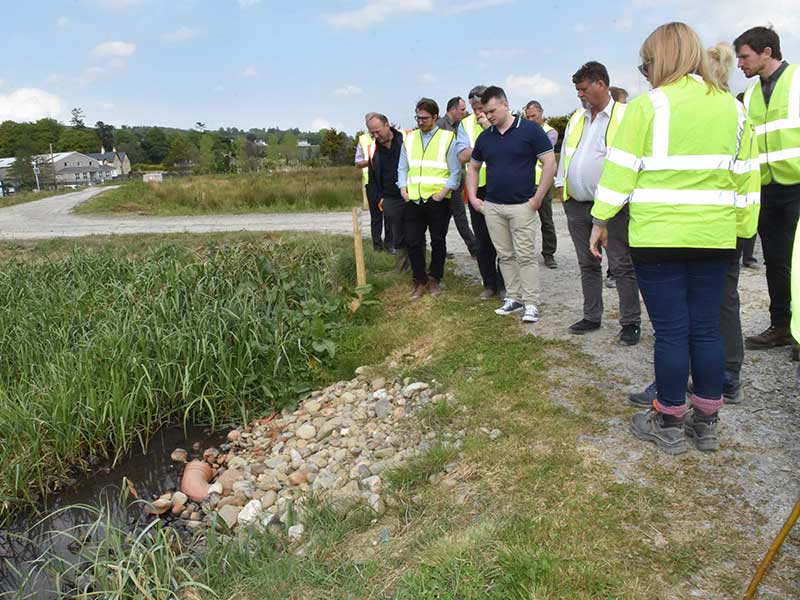
Constructed wetlands can help to capture nutrients from agriculture run-off before they enter water bodies. The efficiency of a wetland for nutrient retention (sedimentation, uptake by plants and denitrification) is mainly affected by the nutrient load and the residence time for the water entering the wetland.

Slurry injection

5.3. Appropriate solid manure storage

Manure is usually managed as dry solid manure or liquid slurries, stored in especially
Finland, Iceland, Northern Ireland, Republic of Ireland, Scotland
designed Storage Facilities or Structures. Liquid manure and wastewaters are sent to detention ponds or lagoons for settling out the solids fraction and reducing the volume through evaporation (5.1.). Lagoons also serve as a temporary storage facility for land application. However, the quantities of manure generated on the confined animal operations often exceed local crop needs and areas available for application, posing considerable challenges in P management (e.g. Sharpley et al, 1994; Sims et al, 2005; Doody et al, 2012; Doody et al, 2013; Teenstra et al, 2014).

No-till farming

5.2. Appropriate slurry processing and storage systems

Before the use of the slurry e.g. in the field, proper process techniques must be applied.
For farmers, the loss of NH4+ via the NH3 emissions will reduce the fertiliser value and amount of the animal manure. Therefore the implementation of measures to reduce NH3 emissions may contribute to reduce the oversupply of N to crops. One of these measures is the 1) acidification of slurry which can decrease the amount of NH3 emissions from the animal house, the store and after having applied the slurry to the land. Others include 2) solidification/stabilisation techniques which can be implemented but properly modified and adapted on site-specific applications (taking always into consideration the end-use of the treated material and the chemical characteristics of the slurry); 3) slurry cooling – a process which has similar characteristics with the geothermal heat generation. It also lowers ammonia levels in the stable thus contributing to creating better environmental and health conditions (Joergensen, 2009; European Commission, 2018). The Best Available Techniques (BAT) Reference Document for the Intensive Rearing of Poultry and Pigs (EC, 2017) provides the comprehensive list of all best available techniques for the slurries processing.

5.1. Physical Manure Treatment (Solids separation)

Slurry separation separates the dry and liquid portions of the slurry. Separating is of great benefit because the nutrient content of the separated dry matter and liquid is different. Thus, they can be better targeted for field fertilization. e.g. the separated dry fraction can be targeted to phosphorus poor fields or exported off the farm to relieve the pressure from high phosphorus soils.

Precision nutrient application

4.2. Dietary reduction of N and P excretion

Adjust the composition of livestock diets to reduce the total intake of N and P per unit of production. Recent research has shown that animal feed can be formulated to reduce nitrogen (N) and
phosphorus (P) excretion without reducing animal performance (Utah State University Cooperative Extension, 2010; Shields and Orme-Evans, 2015) . The ideal protein concept is a feeding method in which crude protein levels are reduced and amino acids are supplemented in order to reduce N excretion. For reduction of P excretion, adding phytase to the diet has been shown to increase P availability to hogs and chickens.

Constructed wetlands

1.4.1. Controlled Drainage

Major advantages of the controlled drainage system to compare conventional drainage system is a chance to adjust groundwater level to occasionally higher than by normal drainage thereby soil moisture increases especially during dry season and the drainage run is reduced. Enhanced plant water and nutrient intake, thus increasing yield. By controlled drainage farmer can affect fields water economy through out the year and diminish nutrient impact into watercourses.

Overseeding

2.1. Field Nutrient Budgeting

A Nutrient Management Plan (NMP) is a key BEMP strategy in running a farm to optimise crop yield and quality, minimize fertilizer input costs and protect soil and water (European Commission, 2018). The principles of nutrient management are simple and include:
• applying fertilizer only to make up the difference between what is there and what is required to achieve the target yield, which also ensures cost-effectiveness for the producer; and
• ensuring that the added nutrient is available to the crop.

6.1. Vegetative Buffer Strips (VBS)

The purpose of the VBS (also known as filter strips, buffer strips, and buffer zones buffer zones) is to reduce erosion and nutrient flow into water from erosion- sensitive and slanted or repeatedly under-flooded fields. The buffer zone is at least 15 m wide field area, which restricts to main drain or water and is covered by a perennial vegetation on which fertilizers and plant protection products are not spread.

3.2. Establish cover/catch crops

Cover crops contribute to soil quality improvement principally through their decomposition by soil microbes. The products of decomposition, while generally adding to the soil organic matter (SOM) reservoir, benefit the soil in two specific ways, i.e., through soil physical conditioning and through fertility building. The degree of enrichment depends on the quantity and quality of cover-crop biomass. Cellulose-rich plants or plant parts degrade far more rapidly than if they were ligneous – as is the nature of mature grasses (Edwards and Burney, 2005).

Scroll to Top

Stay IN TOUCH. Keep up to date with our efforts & progress

Whether an interested party or observer we would love to keep you up to date. Straight to your mailbox.

Privacy Policy. This information will never be shared.