Livestock

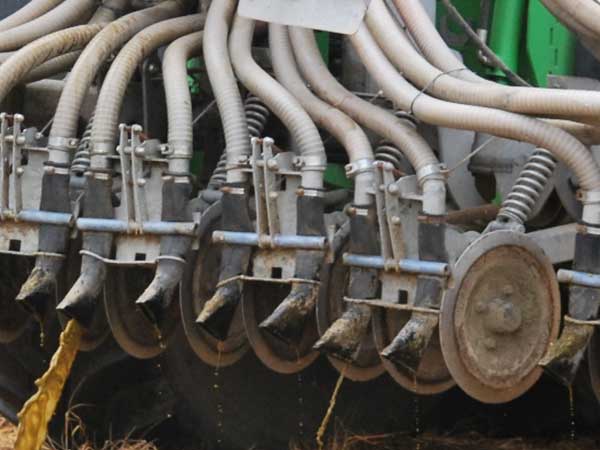
Slurry injection

5.3. Appropriate solid manure storage

Manure is usually managed as dry solid manure or liquid slurries, stored in especially
Finland, Iceland, Northern Ireland, Republic of Ireland, Scotland
designed Storage Facilities or Structures. Liquid manure and wastewaters are sent to detention ponds or lagoons for settling out the solids fraction and reducing the volume through evaporation (5.1.). Lagoons also serve as a temporary storage facility for land application. However, the quantities of manure generated on the confined animal operations often exceed local crop needs and areas available for application, posing considerable challenges in P management (e.g. Sharpley et al, 1994; Sims et al, 2005; Doody et al, 2012; Doody et al, 2013; Teenstra et al, 2014).
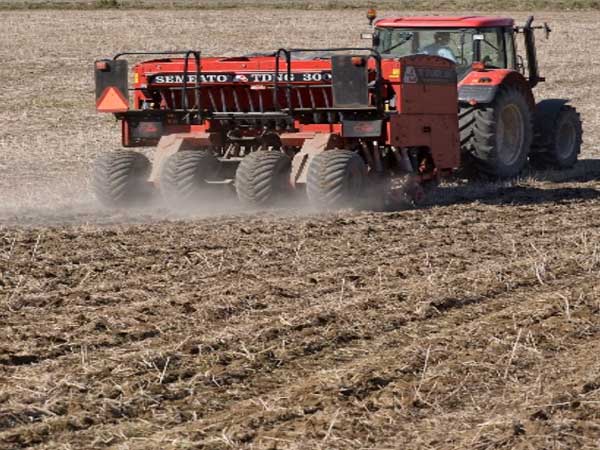
No-till farming

5.2. Appropriate slurry processing and storage systems

Before the use of the slurry e.g. in the field, proper process techniques must be applied.
For farmers, the loss of NH4+ via the NH3 emissions will reduce the fertiliser value and amount of the animal manure. Therefore the implementation of measures to reduce NH3 emissions may contribute to reduce the oversupply of N to crops. One of these measures is the 1) acidification of slurry which can decrease the amount of NH3 emissions from the animal house, the store and after having applied the slurry to the land. Others include 2) solidification/stabilisation techniques which can be implemented but properly modified and adapted on site-specific applications (taking always into consideration the end-use of the treated material and the chemical characteristics of the slurry); 3) slurry cooling – a process which has similar characteristics with the geothermal heat generation. It also lowers ammonia levels in the stable thus contributing to creating better environmental and health conditions (Joergensen, 2009; European Commission, 2018). The Best Available Techniques (BAT) Reference Document for the Intensive Rearing of Poultry and Pigs (EC, 2017) provides the comprehensive list of all best available techniques for the slurries processing.

5.1. Physical Manure Treatment (Solids separation)

Slurry separation separates the dry and liquid portions of the slurry. Separating is of great benefit because the nutrient content of the separated dry matter and liquid is different. Thus, they can be better targeted for field fertilization. e.g. the separated dry fraction can be targeted to phosphorus poor fields or exported off the farm to relieve the pressure from high phosphorus soils.

Precision nutrient application

4.2. Dietary reduction of N and P excretion

Adjust the composition of livestock diets to reduce the total intake of N and P per unit of production. Recent research has shown that animal feed can be formulated to reduce nitrogen (N) and
phosphorus (P) excretion without reducing animal performance (Utah State University Cooperative Extension, 2010; Shields and Orme-Evans, 2015) . The ideal protein concept is a feeding method in which crude protein levels are reduced and amino acids are supplemented in order to reduce N excretion. For reduction of P excretion, adding phytase to the diet has been shown to increase P availability to hogs and chickens.

4.1. Nutrient Budgeting on livestock farms

Lorem ipsum dolor sit amet, consectetur adipiscing elit, sed do eiusmod tempor incididunt ut labore et dolore magna aliqua. Ut enim ad minim veniam, quis nostrud exercitation ullamco laboris nisi ut aliquip ex ea commodo consequat. Duis aute irure dolor in reprehenderit in voluptate velit esse cillum dolore eu fugiat nulla pariatur.

Scroll to Top

Stay IN TOUCH. Keep up to date with our efforts & progress

Whether an interested party or observer we would love to keep you up to date. Straight to your mailbox.

Privacy Policy. This information will never be shared.